
Text RPG vs AI Video RPG: What's the Difference?
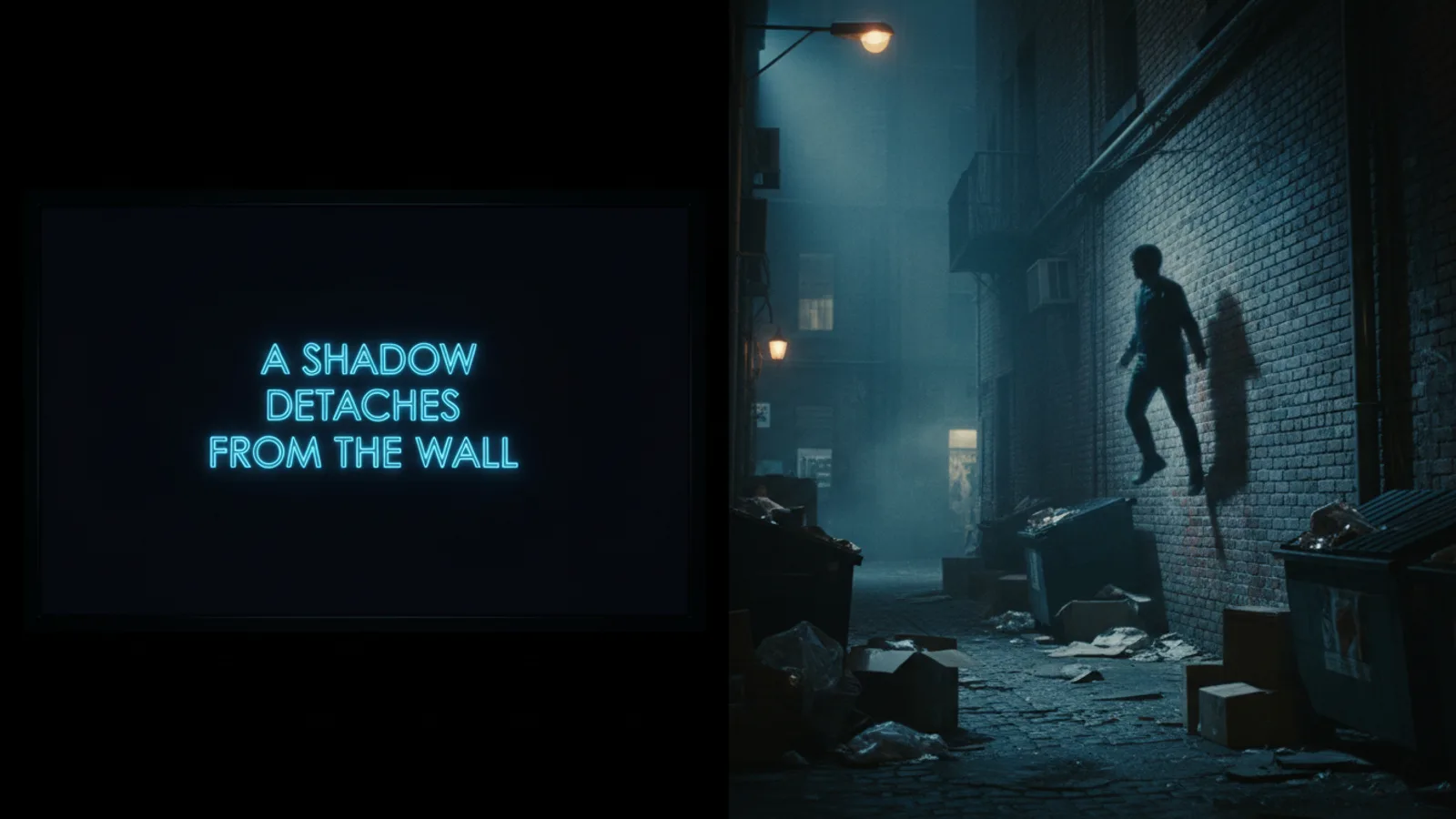
You face a choice. In one world, you read a description of a shadowy figure emerging from a portal. In another, you watch it happen in a personalized video, complete with a character that looks like you. Both experiences are driven by your imagination and choices, but the delivery defines the journey. This is the core difference between a text RPG and an AI video RPG. One tells you the story. The other shows you.
If you've played interactive fiction or AI-powered text adventures, you know the power of branching narratives. The next evolution is here: seeing those branches rendered as cinematic video, where your character is physically present on screen. It's a shift from reading a prompt to watching a scene that you directed. Understanding this distinction helps you choose the right creative tool for the story you want to live.
From Prompts to Pictures: The Visual Leap
The most immediate difference is sensory. A text RPG relies on your mind's eye. The game describes, "You stand on the rain-slicked roof of a neon-drenched skyscraper," and your imagination does the rest. It's an intimate, personal construction. An AI video RPG like Cinely takes that prompt and generates the scene. You see the rain, the neon glow, the vertigo-inducing height. Your avatar, which you design, is standing there in the frame.
This visual leap changes the experience. It makes the fictional world concrete. The dread of a horror scenario or the awe of a fantasy vista becomes visceral because you witness it. The creative focus shifts from purely authoring text to also curating a visual style—you're not just writing a scene, you're casting it, setting the location, and watching the first cut. Explore genres like fantasy or sci-fi to see how different worlds come to life visually.
Branching Paths: The Shared DNA of Choice
At their heart, both text RPGs and AI video RPGs are about agency. You make a choice, and the story adapts. This branching narrative structure is their shared foundation. Whether you type "draw my sword" into a text parser or select "Confront the guard" in a video generator, the story pivots based on your decision.
The outcome, however, diverges. In a text game, the AI might generate a paragraph describing the tense standoff. In an AI video RPG, it generates a short video clip of that very standoff. The underlying technology of interpreting your intent and generating a coherent next step is similar; the output format is what sets them apart. This makes platforms like Cinely a compelling next step for fans of interactive text who crave a more cinematic payoff for their creative choices. CREATE YOUR OWN STORY to experience this direct translation from choice to visual consequence.
Where You Focus Your Creative Energy
Your role as a player or creator feels different in each medium. In a text RPG, you are the primary visual effects department, sound designer, and actor. The prose provides the blueprint, but you furnish the details. It's a deeply collaborative exercise in imagination with the AI.
In an AI video RPG, some of that imaginative labor is handled for you by the visual generator. Your creativity is channeled into different areas: character design, scene direction, genre selection, and the high-level narrative choices. You become more like a director or showrunner, deciding what happens next and watching your "show" unfold. It's less about internally visualizing a described dagger and more about deciding if your character pulls it out, and then seeing the dramatic shot. For creators who want to build and share these cinematic stories, tools like the Cinely Studio provide the control panel.
Which One Is Right For You?
The choice isn't about which is better, but which suits your current mood or creative goal. A text RPG is for when you want unlimited, unbounded imagination. The constraints are only the quality of the text model and your own mind. It's a pure narrative playground, often faster to iterate, and can explore complex, abstract concepts that are difficult to visualize.
An AI video RPG is for when you want to see your story world. It's for the moment you want your cyberpunk detective to actually walk through a holographic advertisement, or your fantasy hero to raise a glowing sword against a dragon, and have that moment exist as a shareable video. It satisfies a craving for tangible, visual storytelling. It's also a powerful tool for creators looking to produce content for an audience that enjoys watching interactive narratives. Consider the depth available with a Premium subscription for extended creative possibilities.
The Future of Interactive Storytelling
The line between these formats is beginning to blur. The core technology that powers descriptive text AI is closely related to the technology that generates coherent visual scenes. As both evolve, we may see more hybrid experiences. The future of interactive storytelling isn't about text versus video; it's about giving you more tools to tell your story in the way that feels most impactful.
Whether you prefer the intimate theater of the mind or the immediate gratification of a cinematic clip, the power remains in your hands. You are the author of your next adventure. The medium is simply your chosen language. If you're ready to move from describing scenes to directing them, the path forward is clear.
- Is an AI video RPG just a more advanced version of a text game like AI Dungeon?
- Not exactly. They share the same foundational principle: your choices drive a unique, AI-generated story. The key difference is output. A text RPG describes scenes in words for you to imagine. An AI video RPG like Cinely renders those scenes as video clips for you to watch. It's an alternative for creators who want to see their character in the action, not just read about them.
- Can I still make complex, detailed choices in an AI video RPG?
- Yes. The branching narrative structure is central. You guide the plot through your decisions at key moments. The complexity comes from the narrative consequences you choose, not from typing elaborate descriptions. The AI interprets your selected action and generates the corresponding visual scene, maintaining story coherence while providing a cinematic result.
- What are the main benefits of a video format over text?
- The primary benefit is immersion through visualization. You don't have to mentally construct a scene from a description; you see it rendered with your custom character. This makes the story more immediately tangible and shareable. It transforms your role from a reader/author to more of a director, focusing on high-level story beats and visual storytelling.
Written with AI assistance and edited by the Cinely Team.